Showing posts with label Obituary. Show all posts

Thursday, December 18, 2025

Rabbi Eliezer Diamond Dies at 73

Beloved Teacher: With great sorrow, Abq Jew announces the passing - one week ago today - of one of his first Torah (in the general sense) and (more specifically) Talmud teachers, Rabbi Eliezer Diamond.

Rabbi Eliezer Diamond

The Jewish Telegraphic Agency (JTA) reports:

Rabbi Eliezer Diamond, beloved Jewish Theological Seminary professor and author, dies at 73

Over his illustrious career as a rabbinic scholar, Diamond mentored generations of rabbis.

Rabbi Eliezer Diamond, who taught at the Jewish Theological Seminary for over three decades and left an indelible mark on generations of rabbis and Jewish scholars, has died.

Diamond died Thursday at 73, following several years battling multiple forms of cancer.

Born in 1952, Diamond received his bachelor’s and master’s degrees and rabbinical ordination from the Rabbi Isaac Elchanan Theological Seminary of Yeshiva University from 1968 to 1977.

But it was at JTS, the Conservative flagship in New York City, where Diamond earned his doctorate in Talmud and was the Rabbi Judah Nadich Professor of Talmud and Rabbinics, that his talents for mentorship and teaching flourished.

Old Lincoln Square Synagogue

Yes, Abq Jew was also at JTS, the Conservative flagship in New York City. But Abq Jew never had the privilege of learning with Rabbi Diamond there.

But Abq Jew did have the privilege of learning with Eliezer Diamond at NYC's Orthodox flagship, the famed Lincoln Square Synagogue (the old building, as pictured) during the summer of 1974.

Here is how Lincoln Square Synagogue got started:

In 1964, in the living room of Emma and Danny Mars's apartment in Lincoln Towers, a part-time rabbi from Yeshiva University named Steven Riskin took the budding Lincoln Square Conservative Synagogue by storm. 

 His originality, charm and boundless energy captivated members and moved them to a more traditionally observant Judaism, in turn sparking a growing Jewish renaissance on Manhattan’s Upper West Side.

Before long, a new synagogue-in-the round made its debut at 200 Amsterdam Avenue, and the excitement at the renamed Lincoln Square Synagogue brought hundreds of young single professionals to the neighborhood, creating a vibrant scene for mixing and matching. 
 
Young families were also drawn to LSS, attracted by the dazzling teachings of Rabbi Riskin, assisted by Rabbi Herschel Cohen z”l and Rabbi Ephraim Buchwald, and the gorgeous melodies of Cantor Sherwood Goffin. 
 
“The New Orthodox” they called it on the cover of New York Magazine. Who knew? 
 
But as members struggled to navigate between the laws of Jewish tradition and the secular values of the surrounding society, Lincoln Square Synagogue began to see its destiny.

In the summer of 1974, Eliezer Diamond was "just" a YU rabbinical student; Abq Jew was newly arrived from California with little formal Jewish education; and Lincoln Square Synagogue was just getting started.

Just down the street from the temples of high culture at Lincoln Center, Lincoln Square Synagogue quickly established itself as a temple of an innovative kind, showcasing the classical and the contemporary, history and modernity. 
 
With joy and pride, the challenges of present-day living were brought into harmony with the ancient traditions passed down through the generations. 
 
The sacred liturgical texts of tefillah were infused with a new vitality as haunting, time-honored melodies shared the stage with the music of Shlomo Carlebach and The Rabbi’s Sons. 
 
The thirst for wisdom was quenched with the scholarship of Rashi and Rambam blended with the insights of 20th-century thinkers like Rabbi Abraham Isaac HaCohen Kook and Rabbi Joseph Dov HaLevi Soloveitchik. 
 
Everything old was new again.

Rabbi Shlomo Riskin

But Rabbi Steve Riskin was already Rabbi Steve Riskin - the NYC go-to guy if you were young, Jewish, and wanted to learn. Literally! When Abq Jew was searching, everyone told him: Go to Riskin! 

Here is what Wikipedia tells us:

Steven Riskin graduated valedictorian, summa cum laude, from Yeshiva University in 1960, where he received rabbinic ordination under the guidance of Rabbi Joseph Soloveitchik.

At the age of 23, Riskin became the founding rabbi of Lincoln Square Synagogue in New York City and served in that position until 1983. Rabbi Riskin transformed the Conservative minyan into one of New York's most innovative and dynamic Orthodox communities. 
 
The synagogue became particularly well known for its pioneering outreach programs which inspired many secular people to become religiously observant Orthodox Jews.

In 1983, Steve Riskin became Shlomo Riskin when he immigrated to the Israeli settlement of Efrat in Judea with his family. There he became the founding Chief Rabbi, a position he held until 2020.

These are days

Eliezer Diamond, of blessed memory, was one of a very small number of YU rabbinical students who Rabbi Steve Riskin brought to LSS in 1974 to instruct and guide and, perhaps, inspire us - an only slightly larger group of young, searching Jewish semi-professionals - in a summer of engagement and learning.

That is where Abq Jew first met Eliezer Diamond, and it is from those days that Abq Jew fondly remembers him. After all these years.

And from those who knew Rabbi Eliezer Diamond more closely, a note from JTS Chancellor Shuly Rubin Schwartz:

From JTS

Dear JTS Community,

The Jewish Theological Seminary joins colleagues, friends, family, and students in mourning the passing of Rabbi Eliezer Diamond z”l, the Rabbi Judah Nadich Professor of Talmud and Rabbinics, who died last evening at home.   

Rabbi Diamond was an honored scholar, trusted religious and spiritual leader, and transformational Talmudist. 

Rabbi Diamond taught courses in Talmud and Rabbinics at JTS for more than 35 years, retiring approximately one year ago. 

Generations of students were profoundly shaped by his inspiring teaching. His influential writings on prayer, asceticism, rabbinic narrative, and issues of environmental law and ethics have enriched the broader Jewish world. He is the author of Holy Men and Hunger Artists: Fasting and Asceticism in Rabbinic Culture and was at work editing a commentary on Yerushalmi Pesahim written by JTS Professor Louis Ginzberg (z”l). 

Rabbi Diamond was not only an intellectual powerhouse, but had a deeply spiritual core. The combination of his intellect and his sensitivity gave him a unique perspective on how to analyze texts, approach the liturgy, and live as an observant Jew.  As a dean, I saw at close range for decades how devoted he was to his teaching and to his students.  

Provost Jeff Kress shared that Rabbi Diamond’s passing is a profound loss to our community. He said, “The gift of Eliezer was not only in how much he knew, but in how generously he shared that knowledge with all those around him.” 

Rabbi Diamond received his BA, MS, and Rabbinic Ordination from Yeshiva University and earned his PhD in Talmud at JTS. 

We know that many outside the JTS community are grieving as well since Rabbi Diamond’s impact extended far beyond our campus. Students at Stern College, Hadar, Drisha Institute, the Reconstructionist Rabbinical College, the 92nd Street Y, and several Ramah camps were fortunate to learn from him throughout his long career. 

May Rabbi Diamond’s memory always serve as a blessing for all those whose lives he touched. 
 
Chancellor Shuly Rubin Schwartz


A blessing

Monday, January 13, 2025

Peter Yarrow Dies at 86

Day Is Done: As you have almost certainly heard - Peter Yarrow, of Peter, Paul and Mary - has died, at the age of 86. The Associated Press reports:

Peter Yarrow

Peter Yarrow, the singer-songwriter best known as one-third of Peter, Paul and Mary, the folk-music trio whose impassioned harmonies transfixed millions as they lifted their voices in favor of civil rights and against war, has died. He was 86.

Yarrow, who also co-wrote the group’s most enduring song, “Puff the Magic Dragon,” died Tuesday in New York, publicist Ken Sunshine said. Yarrow had bladder cancer for the past four years.

“Our fearless dragon is tired and has entered the last chapter of his magnificent life. The world knows Peter Yarrow the iconic folk activist, but the human being behind the legend is every bit as generous, creative, passionate, playful, and wise as his lyrics suggest,” his daughter Bethany said in a statement.

Abq Jew will leave it to the many, many others who knew Peter Yarrow - or met him, or heard him perform - to provide a proper eulogy. There's plenty of them, and they're all over the Internet.

Instead, here is Abq Jew's tribute - Day Is Done, written by Peter Yarrow in 1968. One of Abq Jew's favorite PP&M classics, which he used to sing to his son - when both of them were a lot younger.

Wikipedia tells us -

The song was written as an anti-war song during the Vietnam War era. According to Yarrow, it was written from the perspective of his younger brother who faced the possibility of getting drafted into the army.

Yarrow performed it as the opening song at a concert during the anti-war march he helped organized in Washington in November 1969. It became one of the best-known protest songs of the era. 

Yarrow said that the message of the song is that 

Children Playing

"Children will lead us to a better world".

First - a version with Peter, Paul and Mary; the Smothers Brothers; Donovan; and Jennifer Warnes.

Click here for video

Day Is Done

Peter Yarrow

Tell me why youre crying, my son
I know youre frightened, like everyone
Is it the thunder in the distance you fear?
Will it help if I stay very near? I am here

And if you take my hand my son
All will be well when the day is done
And if you take my hand my son
All will be well when the day is done

Day is done, day is done, day is done, day is done

Do you ask why Im sighing, my son?
You shall inherit what mankind has done
In a world filled with sorrow and woe
If you ask me why this is so, I really dont know

And if you take my hand my son
All will be well when the day is done
And if you take my hand my son
All will be well when the day is done

Day is done, day is done, day is done, day is done

Tell me why youre smiling my son
Is there a secret you can tell everyone?
Do you know more than men that are wise?
Can you see what we all must disguise through your loving eyes?

And if you take my hand my son
All will be well when the day is done
And if you take my hand my son
All will be well when the day is done

Day is done, day is done, day is done, day is done

And if you take my hand my son
All will be well when the day is done
And if you take my hand my son
All will be well when the day is done

And here - the classic version with Peter, Paul and Mommy. And with the incomparable Paul Prestopino, of blessed memory, on banjo.

Click here for video

,

Memory Blessing


Tuesday, November 26, 2024

Remembering Alice Brock

And Her Restaurant: It was about nine years ago (OK ... it was exactly June 30, 2015) that Abq Jew posted a blog (see Arlo And Alice Meet Jane) to tell us all about Jane Ellen's The World of Arlo Guthrie OASIS class - as we sorta approached the 50th Anniversary of the Alice's Restaurant Masacree.

Wow! That was 9+ years ago! During those nine years (plus almost five months), just a few things have changed. As you may recall.

  • OASIS Albuquerque Director Kathleen Raskob retired.
  • OASIS Albuquerque Teacher Extraordinaire Jane Ellen retired. And moved to Florida!
  • Famed folksinger Arlo Davy Guthrie turned 77.
  • Famed personality Alice Brock died last week (on November 21), at the age of 83. Just before Thanksgiving.

Alice Brock

Yes, Alice Brock was the woman and restaurant owner behind Arlo's now-classic anti-war and anti-litter song, Alice's Restaurant. Berkshire Magazine wrote on Instagram: 

We are deeply saddened to hear that Alice Brock, who was an inspiration for the song “Alice’s Restaurant” by Arlo Guthrie and a legend in the Berkshires, died on Thursday. She was 83 years old, leaving us just one week before Thanksgiving. 

Two years ago, editor-in-chief Anastasia Stanmeyer traveled to Provincetown where Alice lived, to sit and talk with her about her time in the Berkshires and in the Cape. We have included a link to the exclusive story, “Breaking Bread with Alice.” 

Alice is pictured here at her kitchen table. “This is the only thing I brought with me from the Berkshires,” she told Anastasia. “It has two leafs. We used to all sit around this table in the church whenever we got together. This is where Arlo wrote ‘Alice’s Restaurant Massacree,’ or at least some of it. We were all making up choruses, but he had his own ideas.” 

Among other stories, Alice recounted how she loaded up her Cadillac with her belongings and made her way to Provincetown in 1978. There’s a photo here from one of her cookbooks, as well as a photo of Alice sitting on a car taken by Jane McWhorter before Alice headed east. 

We can picture Alice in that Cadillac once again, on the highway to her next destination. 

Alice Brock

Here is a portion of what Abq Jew wrote way back in 2015:

Jane Ellen @ OASIS Albuquerque

The 4th of July is a long way from Thanksgiving (145 days this year, to be exact). So Abq Jew is pretty sure he will be the first to remind the world of the

Massacree

Abq Jew here writes not of the song, but of the event (or series of events) that inspired it.
This song is called "Alice's Restaurant." It's about Alice, and the restaurant, but "Alice's Restaurant" is not the name of the restaurant, that's just the name of the song. That's why I call the song "Alice's Restaurant."
Album

As Abq Jew recently reported (see Summer 2015 @ OASIS Albuquerque), Jane Ellen (see Atomic Cocktail & Uranium Rock), the Musical Muse of the Abq Metro, will be teaching about Arlo Guthrie this week.

OASIS Class

Now, the story of the Alice's Restaurant Massacree (as the song is properly known) began back on Thanksgiving Day in 1965.

For those keeping score: Thanksgiving 1965 fell on Thursday (you knew that, right?) November 25, which was (unlike this year) but 144 days after the 4th of July 1965.

The Alice in the song (Wikipedia tells us) was restaurant-owner Alice Brock, who in 1964 used $2,000 supplied by her mother to purchase a deconsecrated church in Great Barrington, Massachusetts,
Now it all started two Thanksgivings ago ... two years ago, on Thanksgiving, when my friend and I went up to visit Alice at the restaurant. 
But Alice doesn't live in the restaurant; she lives in the church nearby the restaurant, in the bell tower with her husband Ray and Facha, the dog. 
And livin' in the bell tower like that, they got a lot of room downstairs where the pews used to be. And havin' all that room (seein' as how they took out all the pews), they decided that they didn't have to take out their garbage for a long time.
Pastrami

Now what, Abq Jew hears you ask, does this have to do
with the price of pastrami in Poughkeepsie?

And the answer is ... nothing much. Except that Arlo is, in fact, a dyed in the wool MOT, although the color has faded somewhat over the years. As Wikipedia tells us:
Arlo Guthrie was born in Brooklyn, New York, the son of folk singer and composer Woody Guthrie and his wife Marjorie Mazia Guthrie. His sister is record producer Nora Guthrie. 
His mother was a one-time professional dancer with the Martha Graham Company and founder of the Committee to Combat Huntington's Disease, the disease that took Woody's life in 1967. 
His father was from a Protestant family and his mother was Jewish. His maternal grandmother was renowned Yiddish poet Aliza Greenblatt.

As it turns out - it's a little-known factoid that Arlo Guthrie's Bar Mitzvah tutor was ultra-nationalist Rabbi Meir Kahane, who formed the Jewish Defense League and (later) founded the Israeli political party Kach.

"Rabbi Kahane was a really nice, patient teacher," Guthrie later recalled, "but shortly after he started giving me my lessons, he started going haywire. Maybe I was responsible."
And, as it also turns out - Alice, too, was, in fact, a dyed in the wool MOT, although the color faded somewhat over the years. As Wikipedia tells us:
Brock was born Alice May Pelkey in Brooklyn, New York City. 
Her mother, Mary Pelkey, was a Jewish native of Brooklyn; her father, an Irish Catholic man, was originally from Pittsfield, Massachusetts. The Pelkey family was relatively well-to-do and often spent summers in Provincetown, Massachusetts, where Mr. Pelkey sold artwork for Peter Hunt. 
Neither of her parents were religious, but her family had many connections to Jewish culture and she herself variously identified as a Jew and as half-Jewish,

When Abq Jew ponders the knowledge and values he will pass on to his kids and grandkids - he realizes that they have no idea who Arlo Guthrie is or what Alice's Restaurant meant to a whole generation of anti-war kids way back when.

They have never heard the song. The phrase
"twenty-seven 8 x 10 colored glossy photographs
with circles and arrows and a paragraph on the back
of each one explainin' what each one was"

means nothing in particular to them.
So - this is for the kids.

Click here for video!

And - for the historical record - Wikipedia tells us that "Alice's Restaurant" was released in October 1967. However (and this is a big however):
"Alice's Restaurant" was performed on July 17, 1967, at the Newport Folk Festival in a workshop or breakout section on "topical songs", where it was such a hit that he was called upon to perform it for the entire festival audience. 
The song's success at Newport and on WBAI led Guthrie to record it in front of a studio audience in New York City and release it as side one of the album Alice's Restaurant in October 1967. 
Guthrie noted that the studio recording combined some of the worst elements of both studio and live recording, in that the audience chosen for the record had already heard him perform the song repeatedly, but because of the audience, he had to record the song and album in one take.
The Last Thanksgiving

Wednesday, July 24, 2024

Bob Newhart Dies at 94

Your Father's Accountant: No, Bob Newhart, now of blessed memory, was not your father's accountant, nor was he Abq Jew's father's accountant. But he could have been, even though he was not a MOT.

Bob Newhart

He was not an accountant - because, he explained, when working as such after his US Army service in the Korean War, his motto, 

"That's close enough" 

and his habit of adjusting petty cash imbalances with his own money showed that he lacked the proper temperament.

Nor did he become a lawyer - because, he explained, he had been asked to "behave unethically" during a college internship.

The Button-Down Mind

Anyway - Bob Newhart eventually became a comedian, known for his deadpan and stammering delivery style. And, of course, for his routines involved hearing half of a conversation as he spoke to someone on the phone.

Here, to preserve his memory. are three (3) of Bob Newhart's best, as previously reported in this very Abq Jew Blog.

1. USS Codfish (March 2019's Wherever You Go)

The monologue sorta begins: 

Men, I know you are all anxious to be reunited with your loved ones... in some cases your wives... but we have a few moments before we surface and I've just jotted down some things that I think are kind of important, I wouldn't take the time if I didn't. 
First of all, I think we ought to give the cooks a standing ovation for the wonderful job they've done. So, if you men want to stand now and let's really hear it for the cooks. 
I don't think you men realize the difficult problem it is aboard a submarine to... uh... you men want to stand now for the cooks ? 
Come on now men, let's let by-gones be by-gones and let's hear it for the cooks, huh?  
Look men, I'm not going to surface until I hear it for the cooks!!!  
Alright, that is a little better ...

You can watch the entire monologue right here. You're welcome!


2. Moo Goo Gai Pan (November 2011's Moo Goo Gai Pan)

The episode starts when Bob balks at going to spend the holiday with Emily's family at a reunion.  He'd rather stay home, he insists.

But Bob's loneliness gets the better of him, and he spends Turkey Day with Howard, Jerry, and even Mr. Carlin - drinking, watching football, drinking, avoiding playing games, and drinking.  Their drunkenness culminates with a now classic scene in which Bob stammers his way though placing a phone order for Chinese food.

If you're so old that you can't remember, or if you came of age after The Bob Newhart Show, this interview with Bob about Moo Goo Gai Pan sets up the scene (and gives some of it away).

So, here is the scene that even TV critics say may be the best American sitcom scene ever.  

3. Bob Hartley's Dream (January 2021's The End of a Very Bad Dream)

It has recently come to Abq Jew's attention that some people - even people of a certain age - have no remembrance of this dream at all. You need a background in sit-com history to fully appreciate this. So here goes.

The Bob Newhart Show

The Bob Newhart Show is an American sitcom television series that aired on CBS from September 16, 1972, to April 1, 1978.

The show centers on Robert "Bob" Hartley, Ph.D. (Newhart), a Chicago psychologist. Most activity occurs between his work and home life, with his supportive, although occasionally sarcastic, wife Emily (Suzanne Pleshette), and their friendly but pesty neighbor, airline navigator Howard Borden (Bill Daily). 

The medical building where Bob's psychology practice is located also houses Jerry Robinson, D.D.S. (Peter Bonerz), an orthodontist whose office is on the same floor, and their receptionist, Carol Kester (Marcia Wallace), as well as a number of other somewhat eccentric doctors who appear occasionally.

Newhart

Newhart is an American sitcom television series that aired on CBS from October 25, 1982, to May 21, 1990. 

The series stars Bob Newhart and Mary Frann as an author and his wife, respectively, who own and operate an inn in a small, rural Vermont town that is home to many eccentric characters. 

TV Guide, TV Land, and A&E named the Newhart series finale as one of the most memorable in television history.

Newhart Series Finale

The series finale of Newhart, titled "The Last Newhart", has been described as one of the most memorable in television history.

The entire town is purchased by a visiting Japanese tycoon, who turns the hamlet into an enormous golf course and recreation resort. Dick and Joanna are the only townspeople who refuse to leave. The others accept million-dollar payoffs and leave in a farewell scene that parodies Fiddler on the Roof.

Five years later, Dick and Joanna continue to run the Stratford Inn, which is now located in the middle of the golf course. The other townspeople, now richer and older, unexpectedly return for a reunion. 

The Darryl brothers also speak for the first time on screen, loudly yelling "Quiet!" at their wives in unison. Dick gets frustrated with the increasingly chaotic scene, and storms out shouting "You're all crazy!", only to be knocked out by an errantly struck golf ball.

The Last Scene

The setting of the last scene is nighttime, in the bedroom of Dr. Bob Hartley (The Bob Newhart Show; see above) and his wife Emily (Suzanne Pleshette). 

Bob awakens, upset, and he wakes Emily to tell her about the very strange dream he has just had: that he was an innkeeper in a small Vermont town filled with eccentric characters and married to a beautiful blonde. 

Emily (slightly upset about hearing Bob's dream dalliance with "a beautiful blonde") tells him "that settles it—no more Japanese food before bed."

Here is the long (10:32) version of that Finale.


But if you just want The Last Scene, here is the short (2:39) version.


So what have learned today?

Domesticated Rabbis

Biden Bridge

Better Days Are Coming

Kamala Harris


Tuesday, November 1, 2022

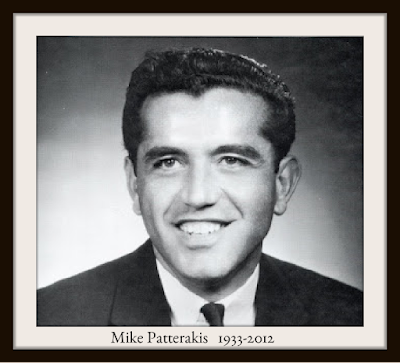
Remembering Mike Patterakis

A Fight Song, A Love Song: Once upon a time, many years ago, Abq Jew attended Peterson High School in Sunnyvale, California, Home of the Pirates. During football season, he was a proud alto sax player in the Marching Band. And during basketball season, he was the proud leader of the Pep Band. 

And Abq Jew was also the founder, leader, banjo player, and vocalist (no one else knew the lyrics) for the Motherhood and Apple Pie Skiffle Band. He was proud of that, too - we were "in demand" in the Bay Area folk music scene.

Mike Patterakis

Behind all that love for music was Mike Patterakis, the Music Director at Peterson High School in Sunnyvale, California. Abq Jew was far from the only student who felt that way. - just about everyone loved Mr Patterakis. (Everyone loved Mr Baer, too - see October 2017's A Paean to Mr Baer).

So. One day last week, as Abq Jew was doing ... research ... on the Web, he came across the following comment and question in his Peterson High School Facebook Group:

I was watching college football the other day, passively listening to a college marching band play their  fight song. It prompted the question, 

“Where did the Peterson High School Fight Song come from?” 

It’s no secret that high school fight songs are adopted from colleges. For instance, Buchser High School used “On, Wisconsin.” Sunnyvale High School used the United States Air Force song. 

So, how about the Peterson Fight Song? Perhaps, some of our band alumni know the answer. The song itself has been rattling around, in my head.

The answer quickly came back:

Mr Patterakis wrote it. 

Well. Of course he did. And Abq Jew added his memories to that simple statement:

Yes, Mr Patterakis wrote the fight song. I remember (I was in the band) discussing the chord progressions with him. I did make one suggestion for improvement [switching a dominant chord to a subdominant], which he agreed was musically correct. But he never changed it. 

And, for the record, 'twas I who wrote the fanfare that introduced the marching band. Yes, Mr Patterakis was a great guy. One of a kind, of blessed memory.

I also remember creating a bluegrass banjo version of the fight song. Dear Lord, what memories. BTW, I'm Class of '68.

And then things got really interesting. Another of Mr Patterakis's more knowledgeable students wrote:

Mr Patterakis used the tune from a Greek folk song, and then wrote the words to fit. Here it is.

"Aha!" said Abq Jew. And did more Web research, then wrote back:

Wow! I never knew that! I went to your YouTube link and ... my God, this is (mostly) our fight song! Thank you for sharing this! 

And here's another video, from world-famous Greek singer Nana Mouskouri, with lyrics: 

Σαμιώτισσα,Samiotissa

Σαμιώτισσα, Σαμιώτισσα, πότε θα πας στη Σάμο
Samiotissa, Samiotissa, pote tha pas sti Samo?
O Samos girl, when will you return to Samos?

As it turns out, Samiotissa is a traditional (Δημοτικό/Παραδοσιακό) song from Samos, one of the Aegean islands of Greece. 

In the eastern Aegean Sea, Samos is separated from Turkey by the mile-wide Mycale Strait - thus making it the closest island to Turkey. 

Samos was the birthplace of Mathematician Pythagoras and Philosopher Epicurus, and is known for producing world famous sweet Muscat wine.

Peterson Pirates

Here is Mr Patterakis's obituary:

MANUEL (MIKE) PATTERAKIS    AUGUST 19, 1933 - APRIL 8, 2012

Manuel (Mike) Patterakis passed away on April 8, 2012 at the Garden City convalescent facility after a lengthy illness. He will be missed by loved ones and friends and is fondly remembered as a talented, thoughtful and caring man. 
Born in Van Houten, New Mexico on August 19, 1933, he moved with his family from Hiawatha, Utah to Modesto in his youth and graduated from Modesto High School before going on to obtain a degree in music from San Jose State University. After two years of army service in Germany, he returned to become a music teacher in the San Jose area. 
His life was marked by an abiding love and devotion to music beginning with participation in his church choir and local high school musical productions, followed by a career as a high school music teacher, and in retirement as a choral director of the Greek Orthodox Church in Stockton. He will be remembered by many in Modesto for his frequent appearances as emcee and singer at the annual food festival of the local Greek Orthodox Church. 
As a teacher he made a real difference in many young lives, and a large number of his former students and faculty from Peterson High School in Sunnyvale, came to Modesto recently to honor him at a joyful and emotional reunion luncheon. 
He is predeceased by father and mother, Gregory and Helen Patterakis, and sister and brother, Grace Capobianco and Col. Chris Patterakis. He is survived by sister-in-law and care-giver, Vicki Patterakis; nieces and nephew, Alicia Rodahaffer, Donna Martin, Patti Perea, Mark Patterakis and their children, godson, George Katsufrakis, and numerous cousins and aunts. 

As mentioned above - on January 7, 2012, many of Mr Patterakis's students visited him - and sang with him. There are lots of videos and more on Facebook's Mike Patterakis Fan Page. 

The video shown here (courtesy of Meg (Conly) Dondero, Class of '74), presents Mike Patterakis and his students singing the Marian A Peterson High School Alma Mater. Yes, Mr Patterakis wrote that, too. And this may be the only recording of the MAPHS Alma Mater on the Web.

Rebbe Nachman

The concept of simcha (happiness) is an important one in Jewish philosophy.

A popular teaching by Rabbi Nachman of Breslov, a 19th-century Chassidic Rabbi, is "Mitzvah Gedolah Le'hiyot Besimcha Tamid," it is a great mitzvah (commandment) to always be in a state of happiness.

When a person is happy, he is much more capable of serving God and going about his daily activities than when depressed or upset.

Happy is how Abq Jew will always remember Mr Patterakis.
May his memory be for a blessing.

Memory Blessing

Tuesday, July 12, 2022

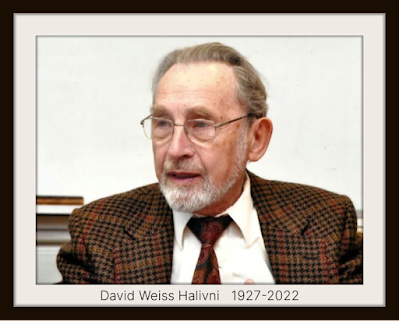
David Weiss Halivni, Talmudist, Dies at 94

The Chosen: Rabbi David Weiss Halivni, a theologian, beloved teacher, and pioneer in the field of academic Talmudic scholarship, died Wednesday [June 29] at age 94 in Israel.

David Weiss Halivni

Amanda Borschel-Dan of The Times of Israel reported:

David Weiss Halivni, pillar of Talmudic scholarship, Holocaust survivor, dies age 94

A prodigy, Halivni received rabbinic ordination at 15, won the Israel Prize and molded generations of scholars in US and Israel, teaching well into his 90s

Prof. David Weiss Halivni, a theologian and pioneer in the field of academic Talmudic scholarship, died Wednesday at age 94.

Born in today’s Ukraine, Halivni was raised in Sighet, Romania, by a Talmudic scholar grandfather who fostered his evident genius with rabbinic texts. In Sighet, he studied alongside Elie Wiesel, who remained a close, lifelong friend.

Halivni was ordained as a rabbi at 15, but by the age of 16, he was captured by the Nazis, and, like Wiesel, was sent to Auschwitz and a series of Nazi camps.
“We were in the ghetto together. He was on the last transport. I was on the first. I left on Monday, he left Thursday,” said Halivni in an obituary for Weisel.
“So we came to Auschwitz at different times.”

Halivni was the only member of his family to survive the Holocaust....

Orphaned, Halivni started life in New York, where his scholarship began anew, eventually at the Jewish Theological Seminary under Rabbi Saul Lieberman. Halivni taught at JTS until 1983 and left over the issue of the ordination of women, moving to Columbia University from where he retired in 2005.

After his retirement, he moved to Israel, where he continued to teach at Hebrew University and Bar Ilan University well into his 90s. In 2008, Halivni was awarded the Israel Prize for his Talmudic work.

Halivni was a daily presence at the National Library in Israel, where he continued his research until just before the coronavirus pandemic. 

Halivni Two Books

In his autobiography The Book and the Sword, Halivni writes that he taught in the concentration camps and even risked his life to save a scrap of paper from a sacred book. However, he recoiled from those who attempted to explain the Holocaust through theological terms.

Later, in his collection of essays Breaking the Tablets: Jewish Theology After the Shoah, Halivni radically proposes that God revealed Himself to the Jewish people twice: once at Mount Sinai with the revelation of presence, and once at Auschwitz with the revelation of utter and complete absence, in which humans were given total and complete free will.

Wikipedia offers a few interesting details:

When he arrived in the United States at the age of 18, he was placed in a Jewish orphanage where he created a stir by challenging the kashrut of the institution since the supervising rabbi did not have a beard and, more importantly, was not fluent in the commentaries of the Pri Megadim by Rabbi Yoseph Te'omim. This was a standard for Rabbis in Europe. 

A social worker introduced him to Saul Lieberman, a leading Talmudist at the Jewish Theological Seminary of America (JTS) in New York, who recognized his brilliance and took him under his wing. Weiss later studied with Lieberman for many years at the JTS.

[Halivni] earned a bachelor's degree in philosophy from Brooklyn College, and a Master's Degree in philosophy from NYU; he wrote his Doctorate in Talmud at JTS.

And this:

Halivni was involved in the 1983 controversy at JTS surrounding the training and ordination of women as rabbis.

He felt that there may be halakhic methods for ordaining women as rabbis, but that more time was needed before such could be legitimately instituted, and that the decision had been made as a policy decision by the governing body of the Seminary rather than as a psak halachah within the traditional rabbinic legal process. 

This disagreement led to his break with the seminary and with the movement of Conservative Judaism, and to his co-founding of the Union for Traditional Judaism and its yeshiva, the Institute of Traditional Judaism.

But wait

The Chosen

The Connection with Chaim Potok's The Chosen

For those who are too young to remember or too old to recall, Wikipedia reminds us:

The Chosen is a novel written by Chaim Potok. It was first published in 1967. It follows the narrator, Reuven Malter, and his friend Daniel Saunders, as they grow up in the Williamsburg neighborhood in Brooklyn, New York, in the 1940s. 

A sequel featuring Reuven's young adult years, The Promise, was published in 1969. The Chosen was made into a movie in 1981.

One of Potok's major themes is the struggle between holding on to the traditions of one's culture in an ever-changing world and taking on the culture of the adopted home country. And his main character is Reuven (Robert or Bobby) Malter: a Modern Orthodox Jew, and a teenage boy. 

Reuven is smart, popular in his community, and has a head for mathematics and logic. His father wants him to be a mathematician when he grows up, but he desires to become a rabbi.

JTS

When Abq Jew studied at JTS, everyone "knew" that
Rabbi David Weiss Halivni was Reuben Malter.

In 2017, on the 50th Anniversary of The Chosen's publication, Aaron R Katz published his reflections on the novel in  Tablet Magazine.

Some Reflections on Chaim Potok’s ‘The Chosen’

The novel, published 50 years ago today, shaped the American Jewish encounter with Hasidism and Orthodoxy, while giving a pretty good play-by-play account of a baseball game

Fifty years ago today, on April 28, 1967, Chaim Potok’s first novel, The Chosen, was published. It would stay on The New York Times best-seller list for 39 weeks and become a finalist for a National Book Award in 1968. 

Despite the passage of time, the novel has continued to stay in the public eye ... Like many Jewish day-school graduates, I first encountered the novel as a reading assignment in the eighth grade some 20 years ago. I could not put it down.

Potok crafted a marvelous story in which the worlds of two Williamsburg boys from two distinct communities, one Hasidic and one Modern Orthodox, collide due to a chance meeting on a baseball diamond.  

Katz continues, going deeper:

In evaluating the novel’s impact on my own life, I’m most drawn to the personal religious struggle of the protagonist, Malter. Perhaps Malter’s struggle is meant to autobiographically reflect the real tensions Potok himself experienced. 

Indeed, the similarities between Potok and Reuven Malter are readily apparent throughout the book.

And then there's Rabbi David Weiss Halivni:

One of the people whom Potok thanks on the opening page of The Promise is professor David (Weiss) Halivni, a Holocaust survivor and longtime Talmud professor at JTS and Columbia University who is universally acclaimed as one of the pioneers of the academic Talmudic approach.  

And, Katz tells us:

Halivni lives in the Shaarei Chessed neighborhood in Jerusalem, and I recently saw him one Shabbos morning at the Kahal Chassidim synagogue. 

While it may seem strange to run into one of the foremost academic Talmudists davening at an Ultra-Orthodox shul in Jerusalem, where the congregants would not generally support his scholarly approach, in praying there, Halivni is true to the sentiments he expressed in his 1983 resignation letter to JTS: 

“It is my personal tragedy that the people I daven with, I cannot talk to, and the people I talk to, I cannot daven with. However, when the chips are down, I will always side with the people I daven with; for I can live without talking. I cannot live without davening.” 

After davening that Shabbos morning, I went up to Halivni to ask him about his relationship with Potok. After exchanging warm greetings and expressing his joy in being recognized, Halivni discussed the many ways the fictional Malter and the Talmudic methodology he uses in The Chosen were modeled after him and his own personal work. 

With a warm smile and a wink, Halivni told me: 

“I am Reuven Malter.” 

Blessed Memory


Tuesday, February 15, 2022

For Orli Sarah Sheffey, ז״ל

Unimaginable Grief: On Sunday, Abq Jew was deeply saddened - no, utterly shattered - to learn that his dear young relative, Orli Sarah Sheffey, 19, had taken her own life on Friday. 

Orli's funeral, which Abq Jew - among countless others, he is sure - watched via livestream, took place earlier today at the North Suburban Synagogue Beth El in Highland Park, Illinois.

Orli Sarah Sheffey
Bright, beautiful, caring. Planned to save the world.

Steve and Timna Sheffey are prominent members of their Jewish community. Steve, in particular, is a renowned pro-Israel activist and progressive Democrat who publishes a weekly newsletter, the Chicagoland Pro-Israel Political Update.

Steve Friess of the Forward says Steve's newsletter is "the Chicago Jewish newsletter that even Republicans have to read," and "arguably, the most widely shared local Jewish media in Chicago."

MyHeritage

Thanks to MyHeritage, Abq Jew connected with Steve in September 2017. As it turns out, Orli was ... is ... Abq Jew's father's uncle's sister-in-law's father's cousin's brother-in-law's great-great-granddaughter. 

Yes, that's a long way up and over and across and down the Family Tree. And no, Abq Jew never met Orli or her family. Still, Orli's death hurts. To be honest - it frightens Abq Jew. He has children, too.

Chesed

Abq Jew and the world learned of Orli's death via a tweet from Ayelet, one of Orli's older sisters.
Orli's obituary from the Shalom Memorial Funeral Home reads:
Orli Sarah Sheffey, 19, beloved daughter of Steven and Timna Sheffey; loving sister of Ariel and Ayelet; adored granddaughter of Rachel Cohen, Isaac Cohen, Joyce Mlodinoff and the late Ralph Sheffey; treasured niece of Susan Sheffey (Steve Jungblut) and Dan Cohen; dear cousin of the late Menachem Jungblut. 
Orli was incredibly smart, passionate, funny, and loving. She cared so much for others and the incredible life she lived influenced so many. She made the world a significantly better place. She had too many friends to count and was loved by all. 
In lieu of flowers, donations may be made to Planned Parenthood (www.plannedparenthood.org).
Orli, a sophomore at Washington University of St Louis, excelled in her studies, worked for progressive causes, was a friend to everyone, and was training to become a suicide counselor. She thought she could do it all.

At Orli's funeral, Hazzan Jacob Sandler sang the 23rd Psalm and El Maleh Rahamim; Rabbi Alex Freedman and Rabbi Michael Schwab spoke heartfelt words of consolation.
 
Ayelet, Ariel, Timna, and Steve offered ... remembrances. And heartbreak. Ariel, at the end, when Orli's casket was wheeled out of the sanctuary, was inconsolable. She screamed; she wailed, she cried. 

As did every member of the congregation.

Memory be a blessing

Unimaginable grief. Deepest condolences to the Sheffey family.
May Orli’s memory always be a blessing. Baruch Dayan HaEmet.

National Suicide Prevention

Ring the bells that still can ring
Forget your perfect offering
There is a crack, a crack in everything
That’s how the light gets in.

Tuesday, November 2, 2021

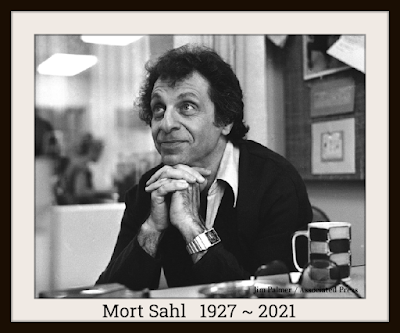
Mort Sahl, Caustic Comic, Dies at 94

Erudite Outrage: Mort Sahl, the comic whose caustic and fearlessly observant routines about Cold War politics in the button-down 1950s transformed American comedy and paved the way for generations of acid-witted humorists, not least Jon Stewart and Bill Maher, died Oct. 26 at his home in Mill Valley, Calif. He was 94.

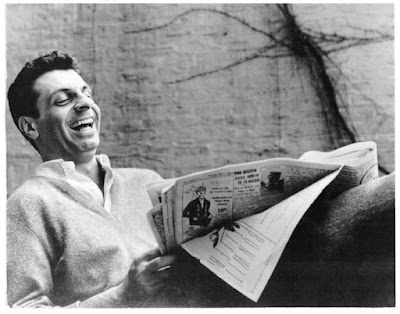
Mort Sahl

So reports John Otis of The Washington Post. Who continues:

Before Mr. Sahl, wisecracks about government and Washington were little more than glib asides with no attempt at the jugular. For the most part, comedians avoided topics that might alienate escapist-minded radio, TV and nightclub audiences and stuck to safer material about mothers-in-law or nagging spouses.

By contrast, Mr. Sahl dove headfirst into the divisive politics and tumult of his time — from the nuclear arms race to segregation — with erudite outrage, a finely tuned sense of the absurd and a high tolerance for risk. Referring to his more genial comic forebear, Time magazine described him in a 1960 cover story as “Will Rogers with fangs.”

And then tells us:

In “Seriously Funny,” a book about rebel comics of the 1950s and 1960s, Gerald Nachman explored the novelty of Mr. Sahl’s intellectual, explanatory style and his Ivy League wardrobe.

“Pre-Sahl was a time in which comedians, clad like bandleaders in spats and tuxes, announced themselves by their brash, anything-for-a-laugh, charred-earth policy and by-the-jokebook gags,” Nachman wrote. “Sahl challenged and changed all that simply by the comic device of being himself and speaking his mind onstage.”

At the end of his shows, Mr. Sahl would ask,

Mort Sahl

“Is there anyone here I haven’t offended?”

Wikipedia tells us:

Morton Lyon Sahl was born on May 11, 1927, in Montreal, Quebec, Canada, the only child of Jewish parents. His father, Harry Sahl, came from an immigrant family on New York City's Lower East Side, and hoped to become a Broadway playwright. He met his wife when she responded to an advertisement he took out in a poetry magazine. Unable to break into the writing field, they moved to Canada where he owned a tobacco store in Montreal.

The family later relocated to Los Angeles, California, where his father, unable to become a Hollywood writer, worked as a clerk and court reporter for the FBI. Sahl notes, "My dad was disappointed in his dreams and he distrusted that world for me. Sahl went to Belmont High School in Los Angeles, where he wrote for the school's newspaper. Actor Richard Crenna was a classmate.

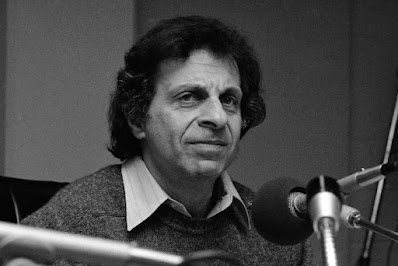
Mort Sahl

Althea Legaspi of Rolling Stone writes:

Sahl made the Top 10 of Rolling Stone‘s “50 Best Stand-Up Comics of All Time” list for his ability to riff on politics “in a way no one had heard before. Just imagine a comic digging through the headlines (sometimes in the middle of a set) looking to expose hypocrisy with the right piece of journalistic evidence – and scoring in a big way.”

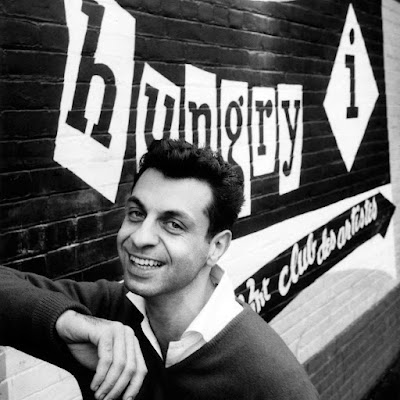
Mort Sahl hungry 1

He made a name for himself performing at the hungry I in San Francisco beginning in 1953, where not only did he buck the system with quick-witted monologues addressing politics and social issues head-on, but he brought a more casual vibe to the then-staid style in the comedian world, where punch lines and mother-in-law jokes ruled and suits and ties were the dress code. He preferred to appear like the youth he reached, wearing casual styles and using language that was relatable to his audience.

Sahl’s work influenced generations of comedians, including Lenny Bruce, Dick Gregory, Jonathan Winters, Joan Rivers, George Carlin and Richard Pryor. He called out hypocrisy during his routines and no political figure was in the safe zone, whether they were Democrat or Republican.

Here is a video clip of Mort Sahl explaining politics and relationships. 

For the politics part - well, you have to be of a certain age to really get it. All the names have changed - but everything else had pretty much stayed the same. As for the relationships part - nothing ever changes.


Of Blessed Memory