A Virtual Seder for Passover 5781 / 2021
Out along the bay
1. Google Exodus: Best. Passover. Video. Ever.
(he must! he must!) that Good News, Salvation and Comfort
are just one (1) Pesach visitor away.
A Nusbaum Seligman Story: Yes, Abq Jew loves to tell stories. Especially stories that connect people, and especially stories that connect people to their past. Which is how and why he manages to find so many long-lost relatives on his Family Tree.
Back in 2019 (see Blood, Spit & Years), Abq Jew told his Old Grandad's Beachwood Beechwood family story, and showed how he developed his wonderfully interesting and terrifically entertaining Not Strictly Genealogy Methodology.
Amy is the great-great-granddaughter of New Mexico Jewish pioneers Bernard Seligman and Frances Nusbaum Seligman. Whose son, Arthur Seligman, was the first Jewish Governor of New Mexico.
![]() |
| Etching of Santa Fe showing the Exchange Hotel and Seligman Brothers store on the Plaza |
Yes, those Seligmans.
Now, Abq Jew knew about his family connection to Amy Bess Cohen for - well, only a couple of years. And he knew she was a writer (and a very good one), having read her first novel, Pacific Street.
Pacific Street is a fictionalized, captivating - yes, that's the word - account of the lives of Amy's grandparents Isadore and Gussie Goldschlager. Which began in Iasi, Romania - just like Mrs Abq Jew's family (see Remembering the Iasi Pogrom).
But Abq Jew didn't find out about Amy's Santa Fe connection until she posted this on her Facebook page.
I am excited to announce the publication of my second family history novel, Santa Fe Love Song. Like my first book Pacific Street, Santa Fe Love Song is a fictionalized account of the lives of my family members, this time my great-great-grandparents Bernard Seligman and Frances Nusbaum.
Bernard was a young German immigrant who became a pioneer on the Santa Fe Trail. He fell in love with the American West and with a woman back east. How he reconciles those two loves is part of the story told in my new book.
Let's start with Arthur Seligman, the man in this photograph.
![]() |
| Governor Arthur Seligman |
Wikipedia tells us:
Arthur Seligman (June 14, 1871 – September 25, 1933) was an American businessman and politician. He served in several offices in New Mexico, including mayor of Santa Fe and governor.
Seligman was born in Santa Fe, New Mexico Territory, the son of Bernard and Frances Seligman.
![]() |
| Bernard & Frances Seligman |
Abq Jew was also excited by the announcement of Amy's new book. Why? Because -
Since Abq Jew's cousin Amy is related (very directly) to our beautiful state's first Jewish governor, so is Abq Jew!
This not to belittle Abq Jew's relationship to Bernard and Frances, who are famous in their own right. Yes, our relationship is rather distant, and involves more luck and good timing (which is to say, marriage) than blood.
In fact, Abq Jew is closer to Billy Joel (11 steps; see Fame, Fortune, and Four Wives) and Ronnie Gilbert (also 11 steps; see Starting With Aunt Bea) than he is to Amy Bess Cohen (14 steps) or Governor Arthur Seligman (17 steps).
After more than 10 years living on the West Bank of the Rio Grande, Abq Jew has achieved a goal that he had only dreamed about. For, to use a term that the New Mexico Jewish Historical Society will surely understand, Abq Jew now has yichus!
So let's talk about Amy's just-published family history novel, Santa Fe Love Song. Santa Fe Love Song's Amazon page tells us:
Bernard is torn between two loves---his new home in Santa Fe and a woman who lives in Philadelphia. How will he resolve the conflict? As a young Jewish immigrant new to America in the 1850s, he finally felt at home after traveling the Santa Fe Trail and settling in Santa Fe with his older brother. His travels across America introduced him to his new nation and challenged his sense of himself and what it meant to be a man.
But then he met Frances while traveling back east. Could he convince her to leave the comforts of a big city, a large Jewish community, and her family?
And if he did, would she be happy? Bernard and Frances are characters inspired by real people, the author's great-great-grandparents. and their story is based on her research of their times and their lives.
Wow. What a story. Torn between the Land of Enchantment and the mishpocha back east? Abq Jew suspects - no, Abq Jew knows - we've all been there.
Want to know the facts about European Jews coming to New Mexico? You can start with Henry Tobias's A History of the Jews in New Mexico - as Amy did - and move on from there.
Want to know what it felt like? What Amazon said about Amy's first novel is even truer here:
In this novel, the author takes you into their world and their minds so that we can all experience what their lives must have been like.
Here is what Amy's novel idea means to the rest of us. You know - in practical terms.
Although Amy does provide an epilogue, a postscript, acknowledgements, and a dedication. However -
If you want to know everything Amy Bess Cohen knows
about her family, you have to read her blog.
Amy's Brotmanblog (yes, Amy is also a Brotman) is packed with records, documents, photographs, interviews, and personal recollections from her years (yes, years) of genealogical research.
That's where the footnotes are.
That's where Amy's Genealogy Methodology resides.
And that's where Abq Jew found most of the photos in this blog post.
Our days in Santa Fe were a wonderful blend of history, art, architecture, and family history.
They call New Mexico the Land of Enchantment, and Santa Fe is an enchanting place even if you have no family ties to the place.
But for me, it was more than that.
Although at times it was hard to imagine what is now very much a tourist-filled place as the old settlement of native Americans, Spanish and Mexican settlers, and then later Anglo settlers like my ancestor, when I could time-travel in my mind to the years when my great-great-grandparents and their children roamed those same streets around the plaza, it was quite magical, and yes, enchanting.
Tsuzamen Mitn Gelt: Abq Jew wishes an XXXL Mazeltov! to American novelist and philanthropist Mackenzie Scott, who has recently re-married after her 2019 divorce from - you, know, Amazon CEO Jeff Bezos.
And who is also noted for being one of the world's richest people (her net worth is about $62 billion). Since her divorce, she has reportedly given away more than $4 billion of her fortune. With plenty more that she is planning to give.
Mackenzie Scott's new husband, Dan Jewett, is a high school chemistry teacher. Which should give us all some small hope that - with A Little Bit of Luck - a better life is achievable.
As Kohelet tells us:
The couple's marriage was announced joyfully via their page on The Giving Pledge, a campaign to encourage extremely wealthy people to contribute a majority of their wealth to philanthropic causes. Where Dan writes:
It is strange to be writing a letter indicating I plan to give away the majority of my wealth during my lifetime, as I have never sought to gather the kind of wealth required to feel like saying such a thing would have particular meaning.
I have been a teacher for the majority of my life, as well as a grateful student of the generosity of those around me. This has meant doing my best to follow their example by passing on resources of all kinds—from time, to energy, to material possessions—when I have had them to give.
And now, in a stroke of happy coincidence, I am married to one of the most generous and kind people I know—and joining her in a commitment to pass on an enormous financial wealth to serve others.
The word tzedaka derives from the Hebrew word tzedek, "justice."
Performing deeds of justice is perhaps the most important obligation Judaism imposes on the Jew. "Tzedek, tzedek you shall pursue," the Torah instructs (Deuteronomy 16:20).
And Egg Matzos for Shabbos: We Jews love Pesach (Passover). Absolutely love it. Whether we go the full Kosher-for-Passover route or simply taste the matzah and horseradish and drink the wine - we Jews love Pesach.
And this year - after a 13-year hiatus - we Jews will begin our love affair with Pesach with a rare event that happens only so often. That makes Once In A Blue Moon seem frequent. Abq Jew hereby advises you, his loyal readers -
Make sure you've got Egg Matzo!
Abq Jew hears you, his loyal readers ask:
What's so special about this?
To which Abq Jew answers:
There are three (3) things you'll notice immediately. (And a fourth thing you've always wondered about that comes up during the Seder.)
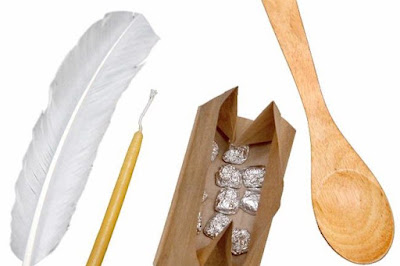
1. Bedikat Chametz
Bedikat Chametz takes place on Thursday night and Friday morning.
Why? Because the day before Pesach - when we would ordinarily burn the chometz - is Shabbat. No starting fires (or transferring flames) on Shabbat!

2. Fast of the Firstborn
The Fast of the Firstborn (or a Siyyum) takes place on Thursday morning.
Why? Because the day before Pesach - when the 'firstborn who open the womb' might ordinarily fast - is Shabbat. No fasting on Shabbat (except on Yom Kippur, of course)!
Fascinating fact: This is a logical AND operation. Which means -
- If you're a firstborn who was delivered via C-section, you don't have to fast because you didn't 'open the womb' - even though you're the firstborn.
- If you're a secondborn to a mother whose firstborn was delivered via C-section, you also don't have to fast because you're not the firstborn - even though you 'opened the womb'.
And note: The other best way to avoid fasting for the Fast of the Firstborn is to instead hold a Siyyum - a public celebration over completing a portion of Torah / Talmud study.
3. Shabbat Meals
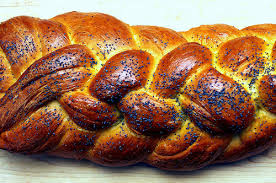
The Shabbat meals - both evening and lunchtime plus, believe it or not, Seudah Shlishit - may involve ... wait for it ... challah.
Why? Because you've got to have 'bread' for it to be considered a meal, so you can make HoMotzi, so you can bentsch Shabbos.
Therefore, defying all logic, you can serve challah right up to about 12 noonish on Saturday, as long as you keep it separate, on a separate dish - or better yet, on a paper plate.
Yes, this is in spite of the fact that you have already performed Bedikat Chametz, burnt the chametz, and publicly announced that any chametz remaining in your possession is 'ownerless property, as the dust of the earth'.
Thank G-d Judaism doesn't have to make sense!
The Rabbis, in their finite but still immense wisdom, thought hard and found a workaround. You guessed it!
Egg Matzo!
How, Abq Jew hears you ask, does Egg Matzo provide a workaround to what is clearly and plainly a contradiction?
Here's how: At the First Seder, we are commanded to eat Matzo lechem oni, poor-man's bread, the 'Bread of Affliction.' To prevent us from jumping the halachic gun, the Rabbis forbade us from eating lechem oni during the hours just before the First Seder.
Here's the clincher: Egg Matzo - because that delicious egg has been added to enrich the flavor - is NOT 'Bread of Affliction'. But it is (if you've shopped carefully) Kosher for Passover!
How was it possible that, among the thousands of Passover Pilgrims who had assembled for the holiday, they could not find a single person who remembered what had been done the last time Passover followed Shabbat?
Answer #1: Blame it on God. The Talmud says: God caused the people to forget in order to make Hillel's achievement appear more impressive, and to facilitate his rapid rise to leadership.
Answer #2: Let’s do the math! Pesach on Saturday Night. How often, one wonders, doesn't one, does this happen?
Abq Jew first became aware of this question in 1977, when he was privileged to study Talmud at the Jewish Theological Seminary with now-Rabbi but then 'only' Professor Judith Hauptman.
Back then - there was, you will recall, no Internet and no Google, although there was now-Rabbi Burt Visotsky, the genius who lived down the hall - Abq Jew did the research using a [printed hardcover of the] 150-Year Jewish Calendar.
And discovered that there were regular intervals of 3, 4, 7, 13, and 20 years between instances of Pesach on Saturday night. As Wikipedia tells us today:
While the coincidence of the Eve of Passover and Shabbat can occur as often as three times in a decade, it is also possible for as many as 20 years to pass between two instances.
The percentage of the Eve of Passover on Shabbat occurring is 11.5%.
During the 20th century, the Eve of Passover fell on Shabbat 12 times: in 1903, 1910, 1923, 1927, 1930, 1947, 1950, 1954, 1974, 1977, 1981, and 1994.
In the 21st century, it has occurred three times: in 2001, 2005, and 2008. Future occurrences in the 21st century include 2021, 2025, 2045, 2048, 2052, 2072, 2075, 2079, and 2099.
So ...
Do you remember where, when, and with whom you celebrated Passover in 2008? In 2005? How about in 2001? Which version of the Haggadah did you use? And whose child, now likely Married With Children, asked the Four Questions?
Taking ancient life spans and 20-year gaps into account, it seems entirely reasonable to Abq Jew that living memory of what to do when Pesach begins on Saturday night might fade.
Which brings us to:
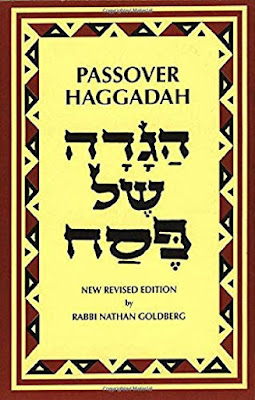
You will find the Fourth Thing You've Always Wondered About right there in the Passover Haggadah. On page 25.
Blessed are You, G-d, our G-d, King of the universe, who has redeemed us and redeemed our fathers from Egypt, and enabled us to attain this night to eat Matzah and Maror.
So too, G-d, our G-d and G-d of our fathers, enable us to attain other holidays and festivals that will come to us in peace with happiness in the rebuilding of Your city, and with rejoicing in Your service [in the Bet Hamikdash].
Then we shall eat
Note: if the festival is on any day except Saturday night say:of the sacrifices and of the Passover-offerings;if the Seder is on Saturday Night say:of the Passover-offerings and of the sacrificeswhose blood shall be sprinkled on the wall of Your altar for acceptance; and we shall thank You with a new song for our redemption and for the deliverance of our souls. Blessed are You, G-d, who redeemed Israel.
In other words: Through the liturgy, we recognize that
The Passover-offering supersedes the Sabbath.
You know - just like Hillel said.